
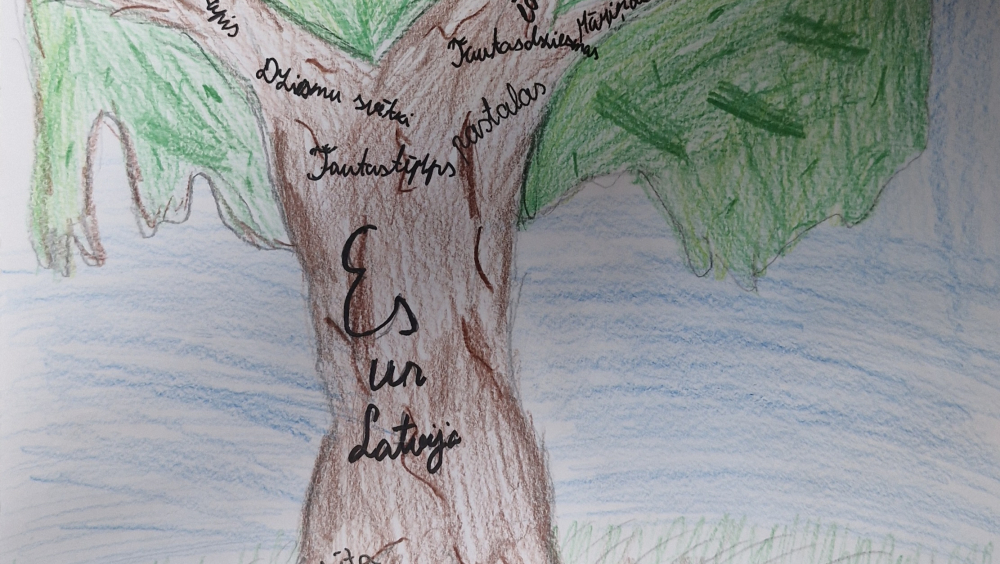
My cultural and historical oak tree - Mans kultūrvēsturiskais ozols
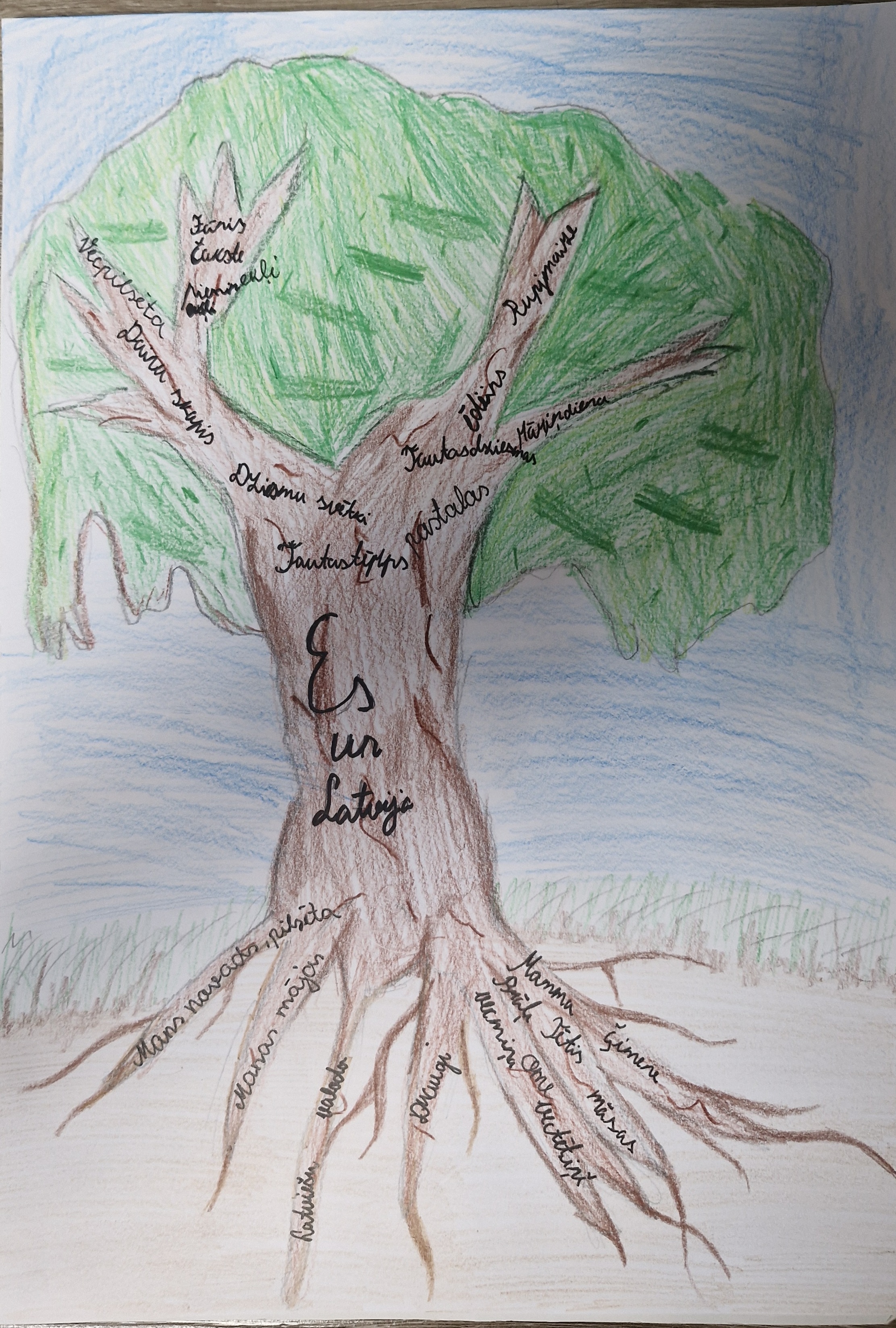
ENG: When I close my eyes and think about Latvia, I see a big, beautiful oak tree. It grows in a wide meadow, and birds are chirping there, the wind is blowing and the sun is shining. This oak tree is not an ordinary tree for me. For me, it means Latvia and our culture. I call it the “cultural and historical oak tree” because it reminds me of everything that is important to us – family, country, songs, work and people.
Roots – family. The roots of an oak tree reach into the ground. They hold the tree firmly and give it the strength to grow. I think that these roots are my family. Without a family, a person cannot feel safe, just as an oak tree cannot grow without roots. Mom, dad, grandma and grandpa are my people, who are important to me. They teach me what is good, what is beautiful and what is important for our Latvia.
Grandma often tells me fairy tales. Mom sings folk songs to me when we do something together. Sometimes she sings the same song several times, and then I feel like it's about our family song.
Dad teaches me how to bake rye bread. He says that rye bread is a Latvian strength food, because it contains a lot of work and love. When the kitchen smells of bread, I feel like the house becomes even warmer. We sit at the table, eat rye bread with honey, I really like it.
The trunk – children and Latvia. The trunk grows from the roots. It is thick, strong and holds the whole tree together. In my oak tree - the trunk is the EU and Latvia.
Latvia is our land, our home, our language and our people. Children are the future of Latvia. If we are healthy, our Latvia will also be strong. When I go to school, I often see the Latvian flag. The teacher told us that the red color of the flag is like love for one's country, but the white color is like a pure heart.
In our city, Jelgava, there is a monument to Jānis Čakste. I see it very often. It stands calm and strong, just like an oak tree. At school I learned that Jānis Čakste was the first President of Latvia and loved Latvia very much. When I look at the monument, I feel like he protects our city and all the people.
Branches – our traditions and songs. Many branches grow from the trunk. Each branch reminds me of something beautiful and special. One of the branches is the Cabinet of Songs. When I first heard about it, it seemed to me that it was a real cabinet of miracles. It stores many folk songs. There are people's joys and sorrows, love, work, nature and everything else. Another beautiful branch is the Song Festival. When I see people singing there on TV, I feel warm. Thousands of people stand together, everyone sings one song, and it seems that all of Latvia is heard. I dream of singing there someday too. Then I would be a part of them.
Oak – our Latvia. My oak tree grows every day. Its roots are my family, who love and teach me. When I am happy, its leaves bloom. When I am sad, they fall, but the tree stands. It never breaks, because it has strong roots – my family and my land. We feel that our cultural and historical heritage is like this oak tree. It is alive, strong and beautiful. It contains everything that unites us – people, songs and work.
LV: Kad es aizveru acis un padomāju par Latviju, es redzu lielu, skaistu ozolu. Tas aug plašā pļavā, un tur čivina putni, pūš vējš un spīd saule. Šis ozols man nav parasts koks. Man tas nozīmē Latviju un mūsu kultūru. Es viņu saucu par “kultūrvēsturisko ozolu”, jo viņš man atgādina visu, kas mums ir svarīgs – ģimeni, valsti, dziesmas, darbus un cilvēkus.
Saknes – ģimene. Ozola saknes sniedzas zemē. Tās tur koku stingri un dod tam spēku augt. Es domāju, ka šīs saknes ir mana ģimene. Bez ģimenes cilvēks nevar justies droši, tāpat kā ozols nevar augt bez saknēm. Mamma, tētis, vecmāmiņa un vectēvs ir mani cilvēki, kas man ir svarīgi. Viņi mani māca, kas ir labi, kas ir skaisti un kas ir svarīgi mūsu Latvijai.
Vecmāmiņa man bieži stāsta pasakas. Mamma man dzied tautasdziesmas, kad kopā kaut ko darām. Dažreiz viņa dzied vienu un to pašu dziesmu vairākas reizes, un tad man liekas, ka tā ir kļuvusi par mūsu ģimenes dziesmu.
Tētis māca mani cept rupjmaizi. Viņš saka, ka rupjmaize ir latviešu spēka ēdiens, jo tajā ir daudz darba un mīlestības. Kad virtuvē smaržo pēc maizes, man ir sajūta, ka māja kļūst vēl siltāka. Mēs sēžam pie galda, ēdam rupjmaizi ar medu, man tas ļoti patīk.
Stumbrs – bērni un Latvija. No saknēm aug stumbrs. Tas ir biezs, stiprs un tur kopā visu koku. Manā ozolā - stumbrs esmu ES un Latvija.
Latvija ir mūsu zeme, mūsu mājas, mūsu valoda un mūsu cilvēki. Bērni ir Latvijas nākotne. Ja mēs būsim veselīgi arī mūsu Latvija būs stipra. Kad eju uz skolu, es bieži redzu Latvijas karogu. Skolotāja mums teica, ka karoga sarkanā krāsa ir kā mīlestība pret savu zemi, bet baltā kā tīra sirds.
Mūsu pilsētā Jelgavā ir Jāņa Čakstes piemineklis. Es to redzu ļoti bieži. Tas stāv mierīgs un stiprs, gluži kā ozols. Skolā es uzzināju, ka Jānis Čakste bija pirmais Latvijas Valsts prezidents un ļoti mīlēja Latviju. Kad paskatos uz pieminekli, man liekas, ka viņš sargā mūsu pilsētu un visus cilvēkus.
Zari – mūsu tradīcijas un dziesmas. No stumbra aug daudz zaru. Katrs zars man atgādina kaut ko skaistu un īpašu. Viens no zariem ir Dainu skapis. Kad pirmo reizi par to dzirdēju, man šķita, ka tas ir īsts brīnumu skapis. Tajā glabājas daudz tautasdziesmu. Tur ir cilvēku prieki un bēdas, mīlestība, darbs, daba un viss kas cits. Vēl viens skaists zars ir dziesmu svētki. Kad es redzu pa televizoru, kā cilvēki tur dzied, man kļūst silti. Tūkstošiem cilvēku stāv kopā, visi dzied vienu dziesmu, un šķiet, ka skan visa Latvija. Es sapņoju kādreiz arī tur dziedāt. Tad es būtu daļa no viņiem.
Ozols – mūsu Latvija. Mans ozols aug katru dienu. Tā saknes ir mana ģimene, kas mani mīl un māca. Kad esmu priecīgs, tam izplaukst lapas. Kad man skumji, tās nokrīt, bet koks turas. Tas nekad nelūst, jo tam ir stipras saknes – mana ģimene un mana zeme.
Mums šķiet, ka mūsu kultūrvēsturiskais mantojums ir kā šis ozols. Tas ir dzīvs, stiprs un skaists. Tajā ir viss, kas mūs vieno – cilvēki, dziesmas un darbs.