
Il trullo
IL TRULLO: PATRIMONIO CULTURALE DELL’UNESCO
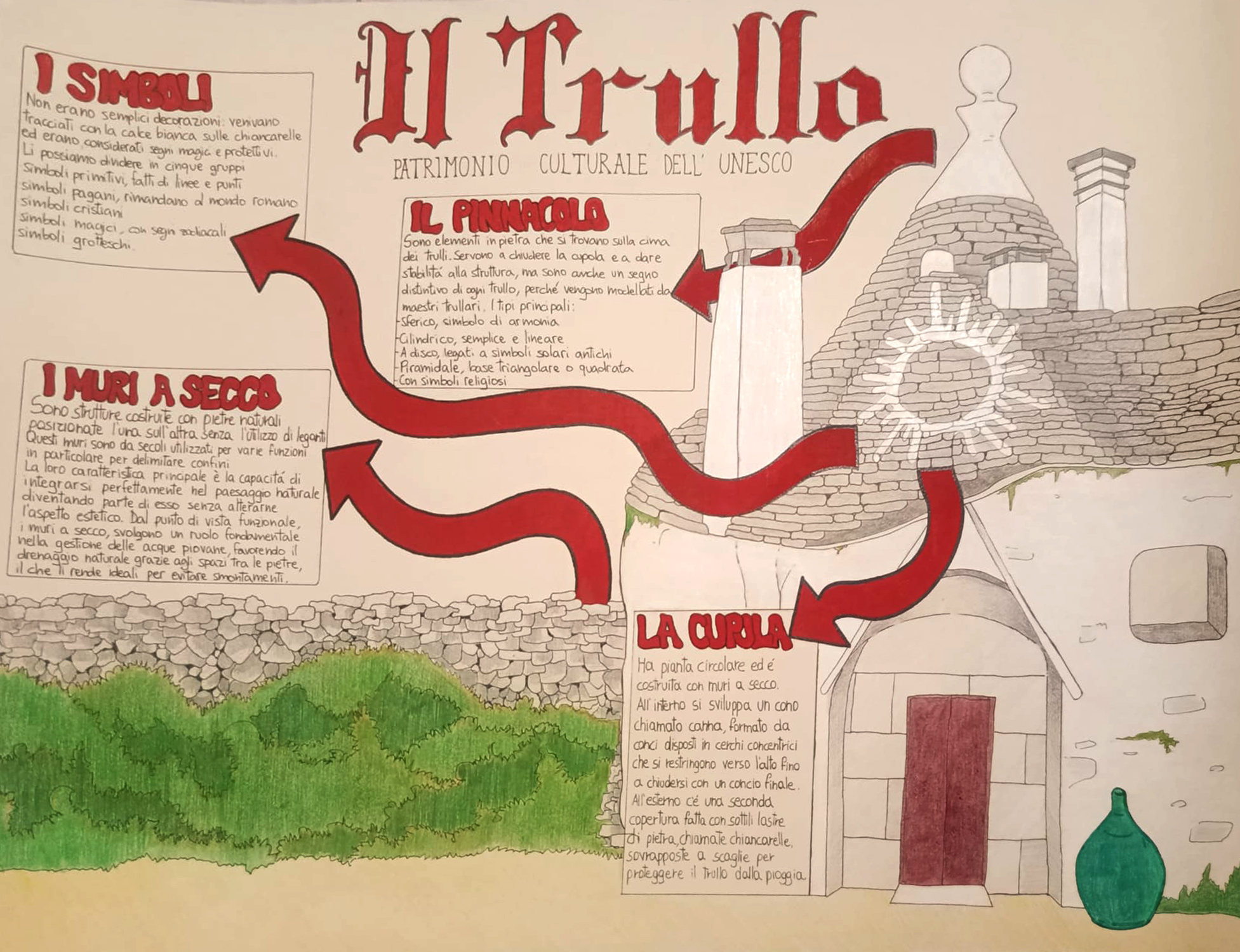
I pinnacoli che coronano la cima dei trulli sono tra gli elementi più affascinanti di queste costruzioni antiche. A prima vista possono sembrare semplici decorazioni, ma in realtà nascono con una funzione pratica: chiudere la cupola e rendere stabile l’intera struttura. Con il tempo, però, questi piccoli elementi in pietra hanno assunto un valore diverso, quasi personale. Ogni maestro trullaro lasciava il proprio segno attraverso la forma del pinnacolo, e spesso anche le famiglie lo consideravano una sorta di “firma” della loro casa.
Le forme sono tante e tutte raccontano qualcosa. Quelle sferiche trasmettono un senso di armonia e completezza. Le forme coniche o cilindriche riprendono la geometria del trullo e ne accompagnano il profilo verso l’alto. I pinnacoli a disco rimandano a simboli solari molto antichi, mentre quelli piramidali sembrano portare con sé un significato protettivo. In epoche più recenti sono comparse le croci e altri piccoli segni religiosi, che parlano della fede e della storia delle famiglie che abitavano quei luoghi.
Anche la cupola del trullo è un piccolo capolavoro. All’interno, il cono è costruito completamente a secco: pietra su pietra, senza malta, con anelli concentrici che si inclinano sempre di più verso l’interno fino a chiudersi in alto. All’esterno, le chiancherelle – sottili lastre di pietra – vengono posate a scaglie, come le tegole di un guscio protettivo. È un sistema semplice ma geniale, che permette ai trulli di respirare e di adattarsi ai movimenti del terreno.
Sui tetti compaiono anche simboli bianchi, dipinti con la calce. Non erano semplici decorazioni: servivano ad attirare fortuna, proteggere la famiglia o esprimere credenze religiose. Nel 1940 vennero classificati in simboli primitivi, pagani, cristiani, magici e grotteschi, segno di un territorio ricchissimo di influenze e tradizioni.
A completare questo paesaggio ci sono i muretti a secco che attraversano campagne e colline. Sono costruiti senza leganti, solo con pietre incastrate tra loro, e si integrano talmente bene nel paesaggio da sembrare parte della natura stessa. Allo stesso tempo svolgono funzioni preziose: sostengono i terreni, favoriscono il drenaggio e proteggono dall’erosione.
The pinnacles that sit on top of the trulli are some of the most intriguing features of these ancient houses. At first glance they might look like simple ornaments, but they actually serve a structural purpose: they seal the top of the cone and help stabilize the entire building. Over time, though, they became something much more personal. Many families and builders treated them like a signature, a way to leave a recognizable mark on the trullo they had created. Each pinnacle was carved by hand, shaped stone after stone, and placed with great skill.
Their forms are surprisingly varied. Some are round and smooth, symbolizing harmony and completeness. Others are conical or cylindrical, echoing the shape of the trullo itself. There are disk-shaped pinnacles that recall ancient solar symbols, and pyramidal ones that seem to carry protective meanings. In more recent centuries, builders began adding crosses or other religious elements—small touches that reflected the beliefs of the families who lived beneath them.
The trullo’s dome is equally fascinating. Inside, its structure is built entirely “a secco,” meaning without mortar. Rings of stones are laid in perfect balance, each row slightly more inward than the one below, creating a self-supporting cone. Outside, thin stone tiles called chiancherelle are arranged like scales, forming a protective skin that keeps the building dry. This technique allows the trullo to breathe and subtly adjust to the movements of the ground—one of the reasons so many have survived for centuries.
Then there are the symbols painted on the roofs. Made with white lime, they were meant to stand out sharply against the dark stones. These symbols weren’t decorative; they were believed to protect the family, attract good fortune, or express religious devotion. In 1940, scholars grouped them into categories such as primitive, pagan, Christian, magical, and grotesque, revealing how many different cultural layers had shaped the region over the centuries.
Completing this landscape are the dry-stone walls that stretch across the countryside. Built without any binding materials, they blend so naturally into the environment that they seem almost grown from the land itself. Yet they have always played a practical role: preventing erosion, marking boundaries, supporting terraces, and allowing rainwater to drain safely through the stones.