
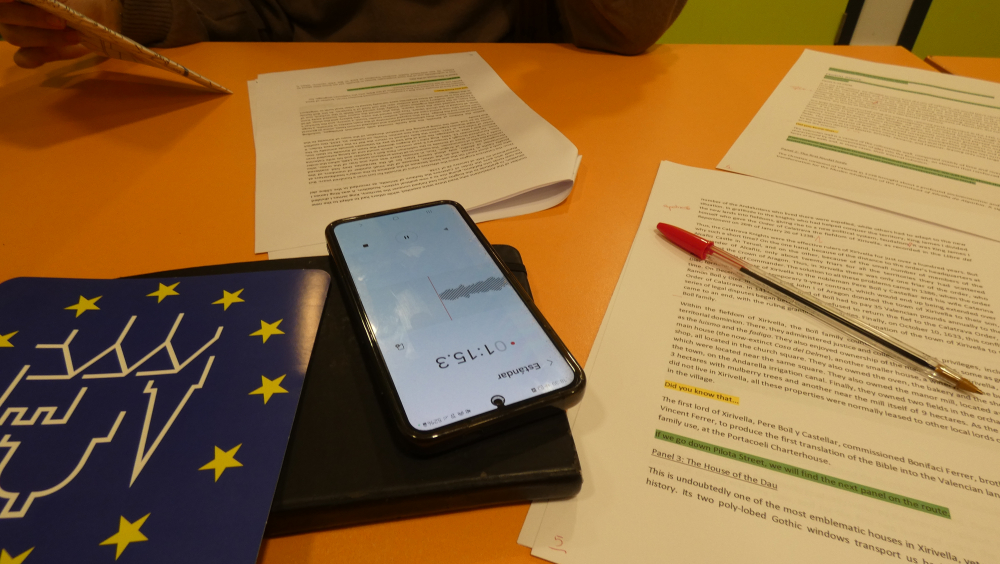
Damos voz al patrimonio de Xirivella - We give voice to the heritage of Xirivella
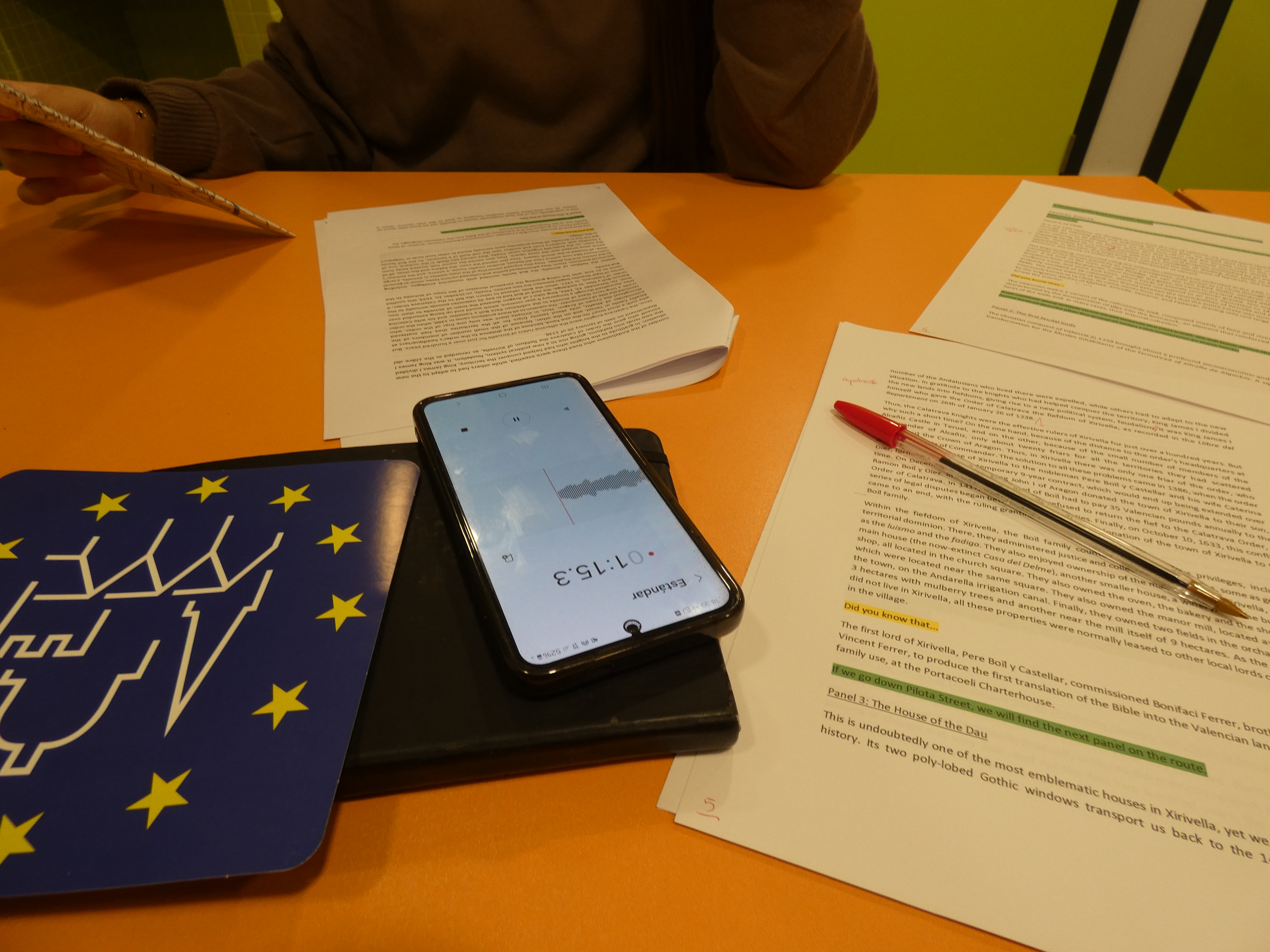
La oportunidad de acercarnos al patrimonio de nuestro pueblo a través de un proyecto tan diferente ha sido, sinceramente, algo que no esperábamos y que nos ha sorprendido para bien. Al principio, cuando nos propusieron ser parte de un trabajo sobre el patrimonio y la historia de Xirivella, sonaba bastante teórico, incluso un poco aburrido. Pero poco a poco nos dimos cuenta de que no se trataba solo de estudiar historia, sino de entender de dónde venimos y de sentir que formamos parte activa de lo que será el futuro cultural de Xirivella.
Todo empezó cuando María, la bibliotecaria municipal, nos propuso participar en este proyecto de difusión del patrimonio local. La idea era crear una serie de monolitos turísticos repartidos por el pueblo, situados en espacios urbanos clave y frente a los edificios más importantes. En total, se destacaban diez lugares fundamentales para conocer la historia, los orígenes y la identidad de Xirivella, tanto para quienes nos visitan como para los propios vecinos. Que contaran con nosotros para algo tan importante nos hizo sentir valorados y responsables, como si nuestra voz también importara a la hora de explicar quiénes somos como pueblo.
En realidad el trabajo de difusión de 10 elementos emblemáticos de nuestra población es un trabajo que se encargó a una empresa especialista en gestión cultural, pero nos dijeron que también incluyen en todos sus trabajos la visión más joven y trabajos de educación patrimonial. Así que en las primeras reuniones nos hablaron de todo el trabajo que se había realizado y que no tenía sentido si no participábamos nosotros, como representación del futuro.
Además, tiene mucho sentido que seamos nosotros quienes participemos en este tipo de iniciativas. Somos la generación que, en teoría, va a heredar y proteger este patrimonio, así que conocerlo de primera mano es casi una obligación. También somos una generación más preparada, más viajada y con más conocimiento de idiomas que nuestros padres y abuelos, y eso jugaba a nuestro favor. A María le pareció interesante que aportáramos esa visión más joven y más abierta, y la verdad es que tenía razón.
El trabajo se organizó por fases. En primer lugar, e equipo de gestión cultural realizó un estudio de investigación sobre la historia de Xirivella y nos facilitó una base de textos bastante completa. Nuestro reto fue leerlos, entenderlos y extraer las ideas más importantes para adaptarlas a un formato claro, breve y accesible para todo tipo de público. No fue solo resumir: fue aprender a explicar bien, a elegir las palabras adecuadas y a pensar en quién nos iba a escuchar o leer.
Después vino la parte lingüística. Tradujimos los textos al valenciano, nuestra lengua materna, lo que resultó bastante natural. Pero el verdadero reto fue hacerlo también en inglés, con el objetivo de atraer turismo extranjero. Con la ayuda de nuestra profesora de inglés, conseguimos una traducción correcta y cuidada, perdiendo poco a poco la vergüenza a expresarnos en otro idioma. Algunos de nosotros, además, hacemos teatro amateur, así que la locución y el hablar en público se convirtieron en un punto fuerte del proyecto.
El hecho de grabar la información de los paneles en tres idiomas hace que estos no sean solo algo para leer, sino una forma mucho más abierta y cercana de conocer la historia del pueblo. Gracias a estos audios, los paneles se vuelven más accesibles para muchas personas diferentes, ya sea porque entienden mejor otro idioma o porque tienen distintas capacidades auditivas o sensoriales. Así, la información no se queda solo en un texto escrito, sino que se transforma en una experiencia más completa.
Para nosotros, como adolescentes, esto significa que la historia de mi pueblo puede llegar a mucha más gente y de una manera más moderna y justa. Me gusta pensar que, poniendo nuestra voz, estamos ayudando a que nadie se quede fuera y a que el patrimonio no sea algo aburrido o difícil de entender, sino algo vivo, cercano y pensado para todos.
Al final, lo que parecía un trabajo teórico se transformó en una experiencia muy completa: aprendimos historia, idiomas, expresión oral y, sobre todo, a valorar nuestro entorno. Saber que nuestra voz y nuestro trabajo formarán parte de los paneles informativos que estarán en las calles de nuestro pueblo es algo que nos hace sentir orgullosos. Es como dejar una pequeña huella en Xirivella y formar parte de su historia de una manera muy especial.
Finalmente hemos elaborado un Site de Google con los archivos que hemos locutado (así como con un video resumen de los trabajos que hemos hecho), sin editar, a disposición de la empresa de gestión cultural para que se sirva de ellos en el momento de realizar las balizas informativas. Pero en esa espera, nos parecía interesante compartirlos con todas las personas interesadas. Gracias
Enlace al trabajo: https://sites.google.com/view/damos-voz-al-patrimonio?usp=sharing
+++
The opportunity to get closer to the heritage of our town through such a different project has honestly been something we did not expect and that surprised us in a very positive way. At the beginning, when we were asked to take part in a project about the heritage and history of Xirivella, it samed quite theoretical, and even a bit boring. But little by little we realised that it was not just about studying history, but about understanding where we come from and feeling that we are an active part of what will be the cultural future of Xirivella.
Everything started when María, the municipal librarian, invited us to participate in this project to promote local heritage. The idea was to create a series of tourist monoliths around the town, placed in key urban spaces and in front of the most important buildings. In total, ten essential places were selected to help visitors and local residents learn about the history, origins and identity of Xirivella. The fact that they counted on us for something so important made us feel valued and responsible, as if our voices also mattered when explaining who we are as a community.
In reality, the work of promoting these ten emblematic elements of our town was asked to a cultural management company. However, they told us that they always include a young perspective and educational heritage projects in their work. In the first meetings, they explained all the research and preparation that they had already done, and how it would not make sense without our participation as representatives of the future generation.
It also makes a lot of sense that we are the ones involved in initiatives like this. We are the generation that is supposed to inherit and protect this heritage, so getting to know it firsthand is almost a responsibility. We are also a more prepared generation, more used to travelling and with a greater knowledge of languages than our parents and grandparents, and that worked in our favour. María thought our younger and more open-minded perspective could be interesting, and she was right.
The project was organised in different phases. First, the cultural management team carried out a historical research study on Xirivella and provided us with a complete base of texts. Our challenge was to read them, understand them and extract the most important ideas in order to adapt them into a clear, short and accessible format for all kinds of audiences. It was not just about summarising, but about learning how to explain things well, choosing the right words and thinking about who would be listening or reading.
Then came the language part. We translated the texts into valencian, our mother language, which felt quite natural. But the real challenge was translating them into English language, with the aim of attracting foreign tourism. With the help of our english teacher, we managed to produce a correct and careful translation, gradually losing our fear of expressing ourselves in another language. Some of us also play amateur theatre, so voice recording and public speaking became one of the strong points of the project.
Recording the information from the panels in three languages means that they are not just something to read, but a much more open and accessible way of discovering the history of the town. Thanks to these audio recordings, the panels become accessible to many different people, whether because they understand another language better or because they have different auditory or sensory abilities. In this way, the information is no longer limited to written text, but becomes a more complete experience.
For us, as teenagers, this means that the history of my town can reach many more people in a more modern and fair way. I like to think that by using our voices, we are helping to make sure no one is left out, and that heritage is not something boring or difficult to understand, but something alive, close and designed for everyone.
At the end, what initially looked like a theoretical project turned into a very complete experience: we learned history, languages, oral expression and, over all, how to value our surroundings. Knowing that our voices and our work will be part of the information panels placed in the streets of our town makes us feel proud. It is like leaving a small mark on Xirivella and becoming part of its history in a very special way.
Finally, we created a Google site with the audio files we recorded (and also a video telling our experience), unedited, and made them available to the cultural management company so they can use them when installing the information beacons. While waiting for that moment, we thought it would be interesting to share them with everyone who might be interested. Thank you.
Link: https://sites.google.com/view/damos-voz-al-patrimonio?usp=sharing