
Dunboyne Heritage Keepers
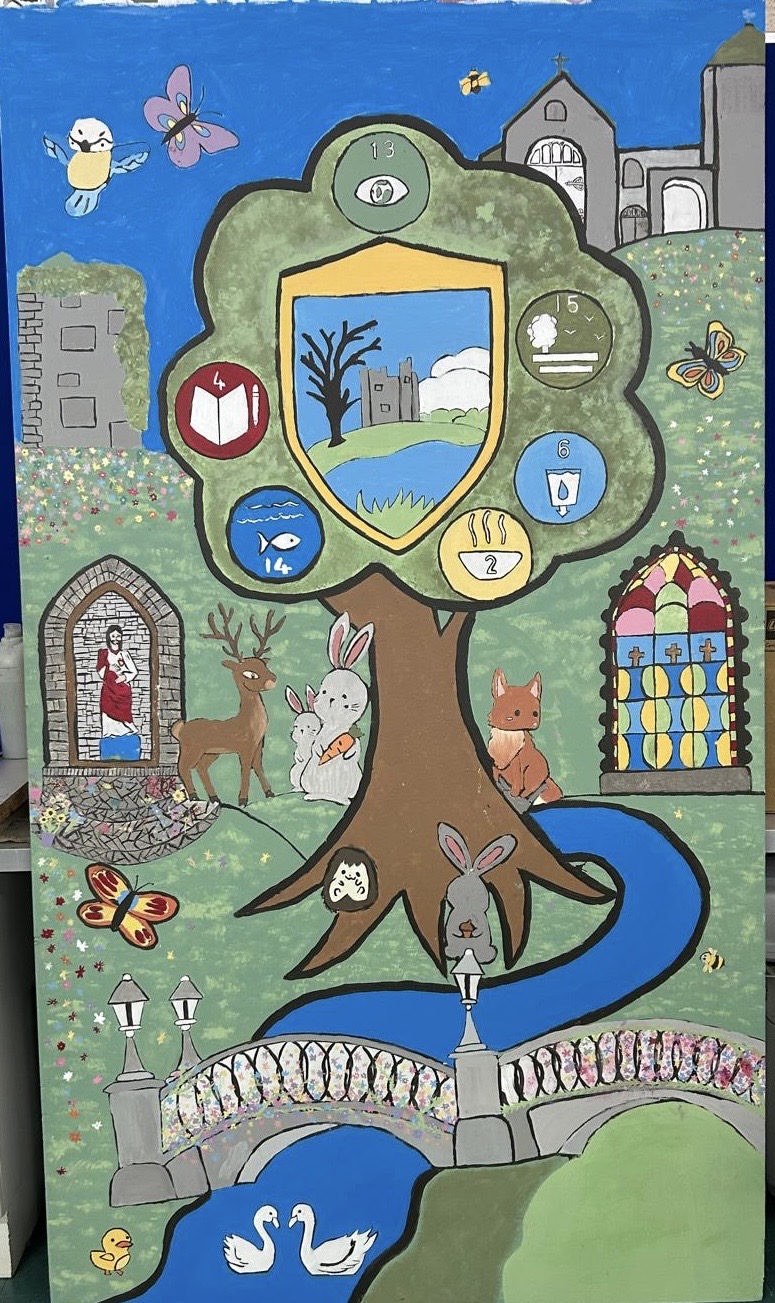
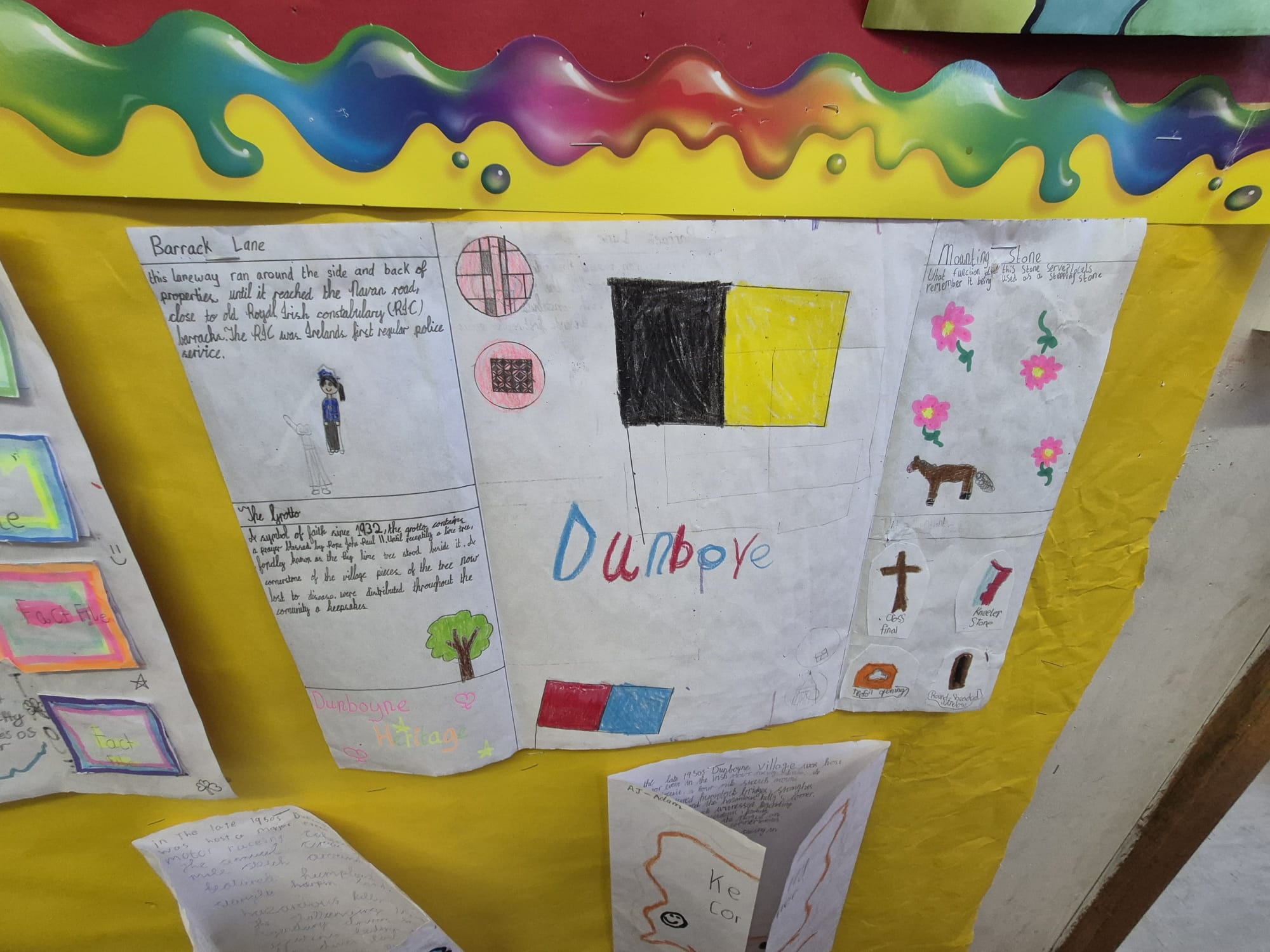
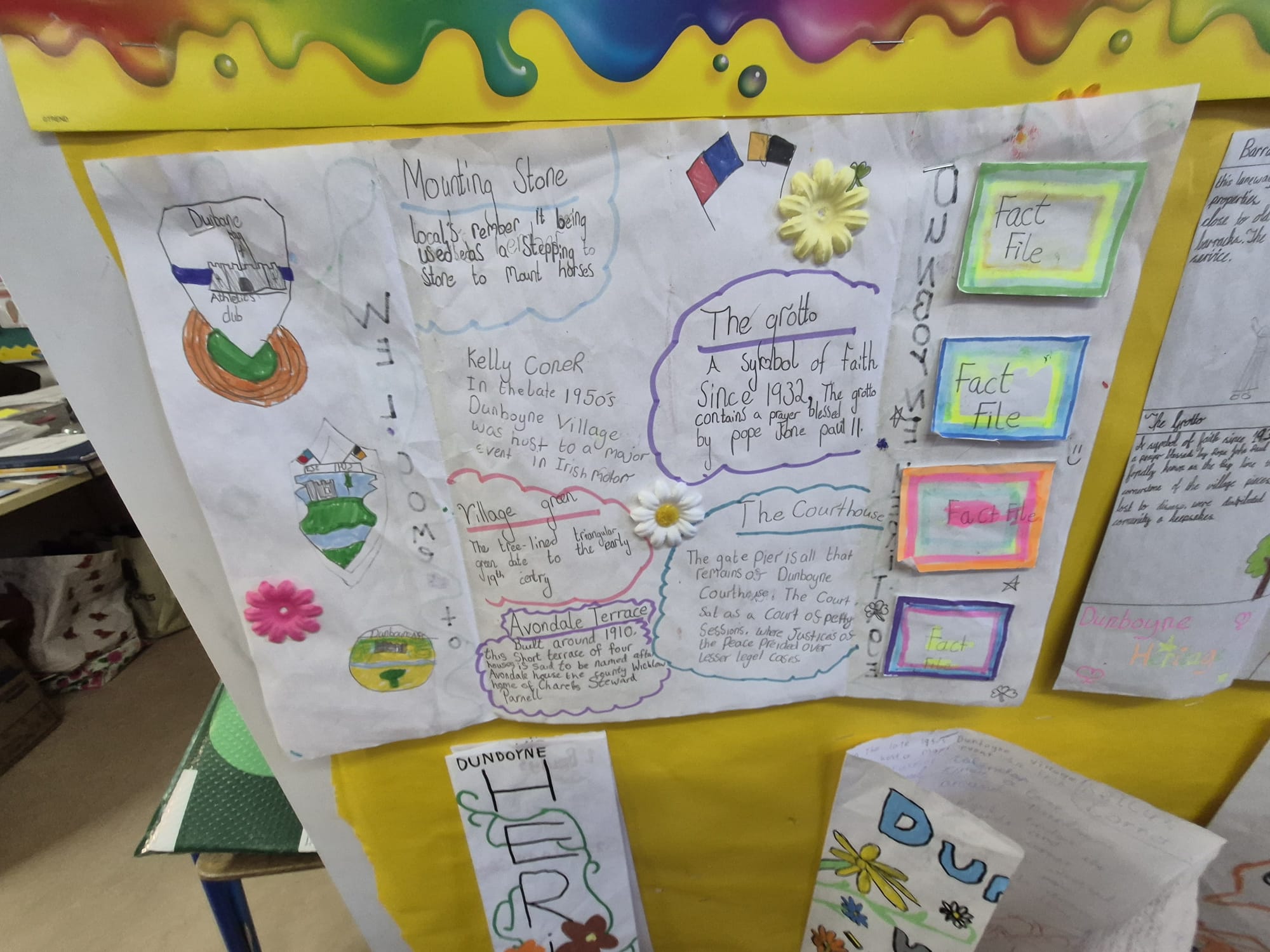
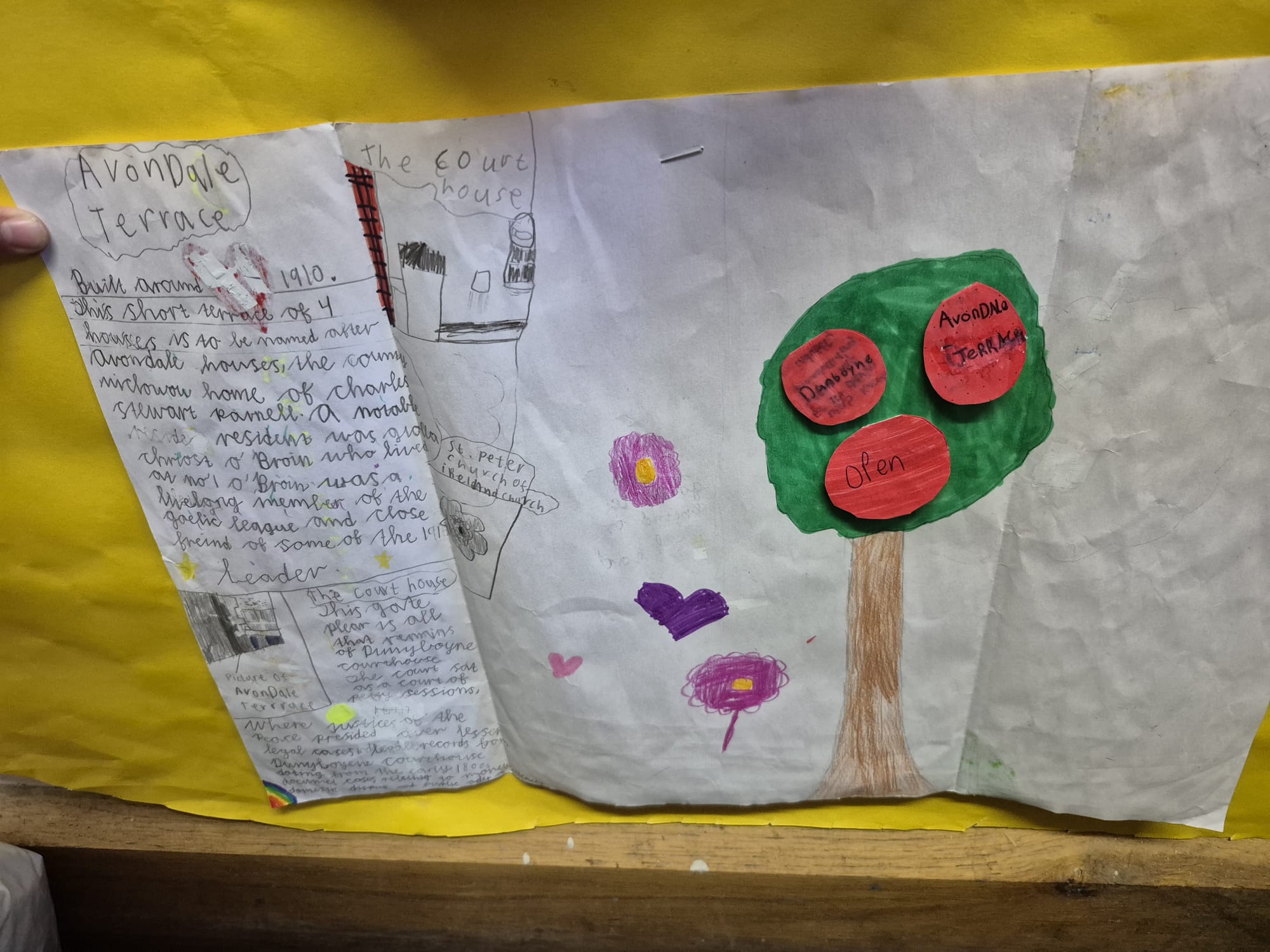
Our heritage mural is a celebration of Dunboyne — its people, its stories, its places, its nature, and its future. When we started this project, we wanted to understand what heritage really means. We learned that heritage is not only about old buildings or events from the past. It is also about our environment, our families, our community, and the things we want to protect for the future. As part of this learning, we take part in the Heritage in Schools Programme, Green Schools Programme, GLOBE Programme, Biodiversity in Schools Nature Hero Awards and the Irish Aid Programme, as well as G.I.Y Grow Your Own, Incredible Edibles, Rivers as Ecosystems, and the Trinity College CAD Lichen Mural Project. We also held an Action Day in our local GAA Club where we planted over 500 spring bulbs. All of these projects show our ongoing commitment to protecting, understanding, and celebrating the natural heritage around us. Our mural is a way for us to show what Dunboyne means to us and how we want it to be for the generations that will come after us.
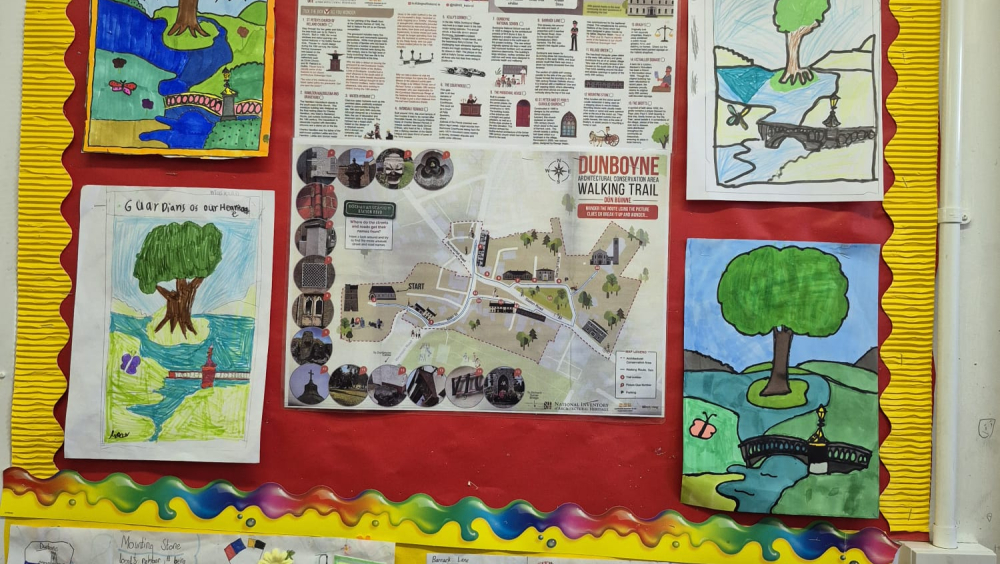
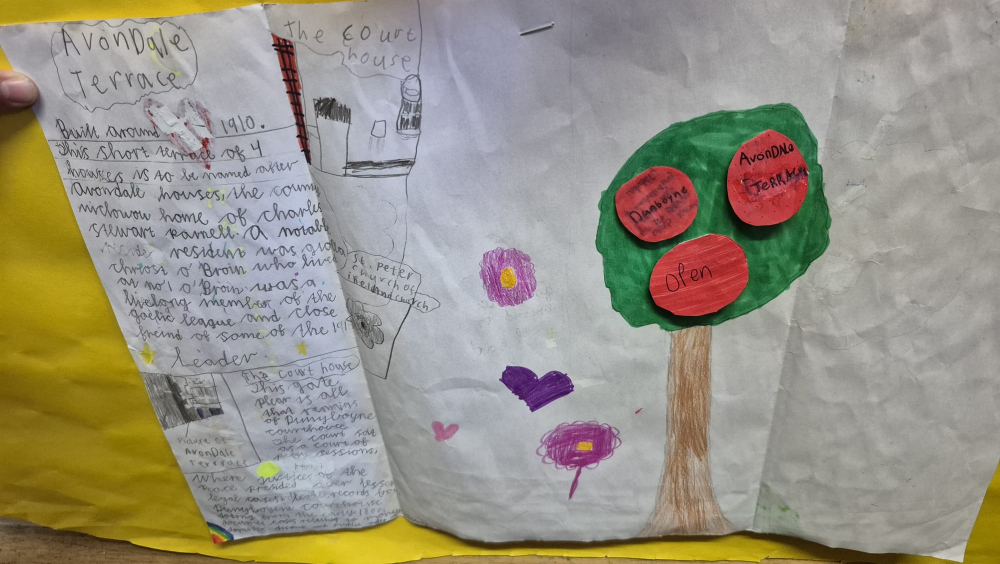
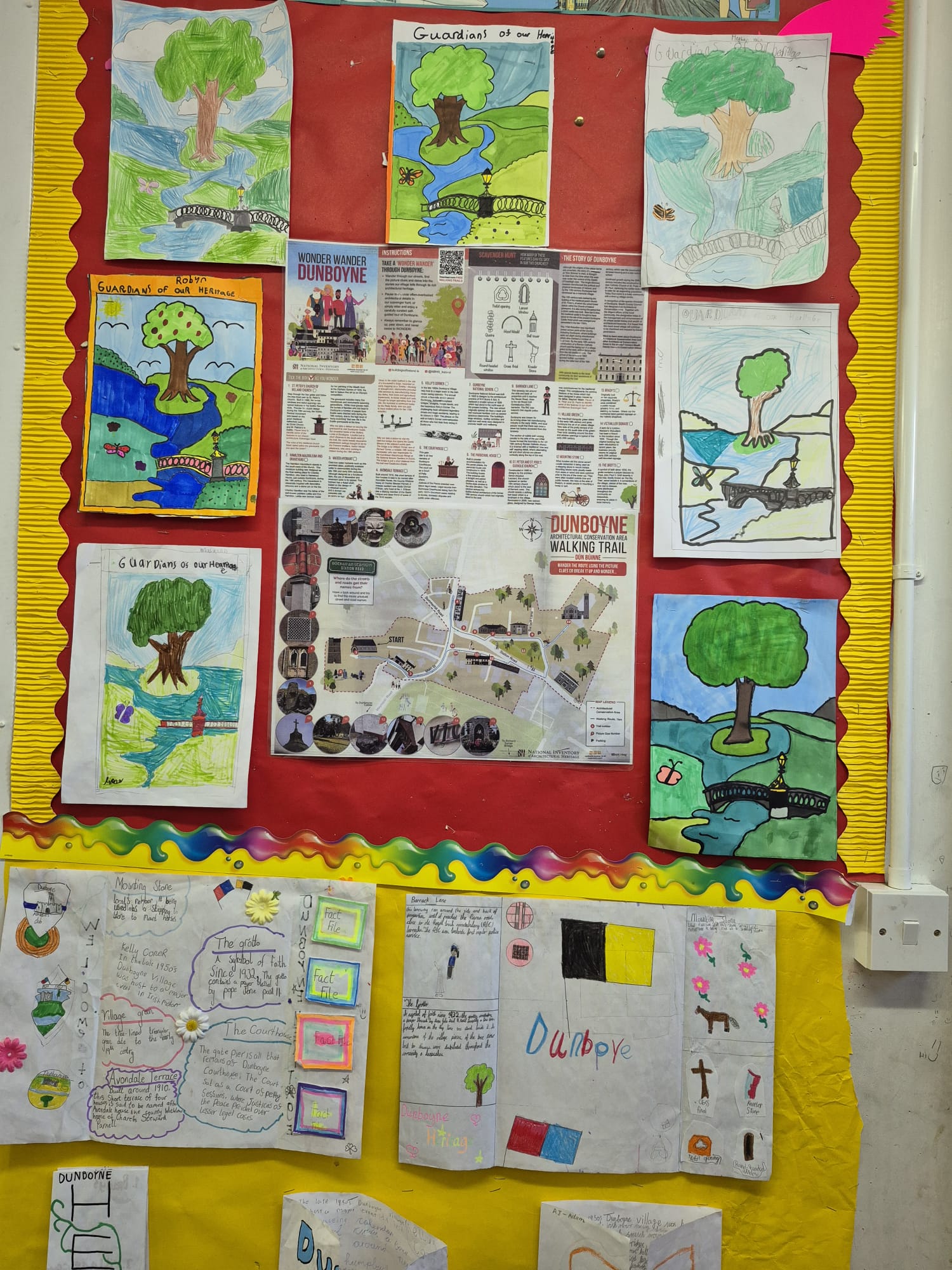
The inspiration for our mural came from the Wonder Wander Walking Trail, a special trail created for Dunboyne by the National Inventory of Architectural Heritage and Meath County Council. We explored parts of this trail as a class, and we were amazed to discover how many incredible sites and stories are right beside us. Even places we walk past every day have hidden meanings and history behind them. Exploring the trail helped us understand how heritage is all around us — sometimes you just have to slow down and look.
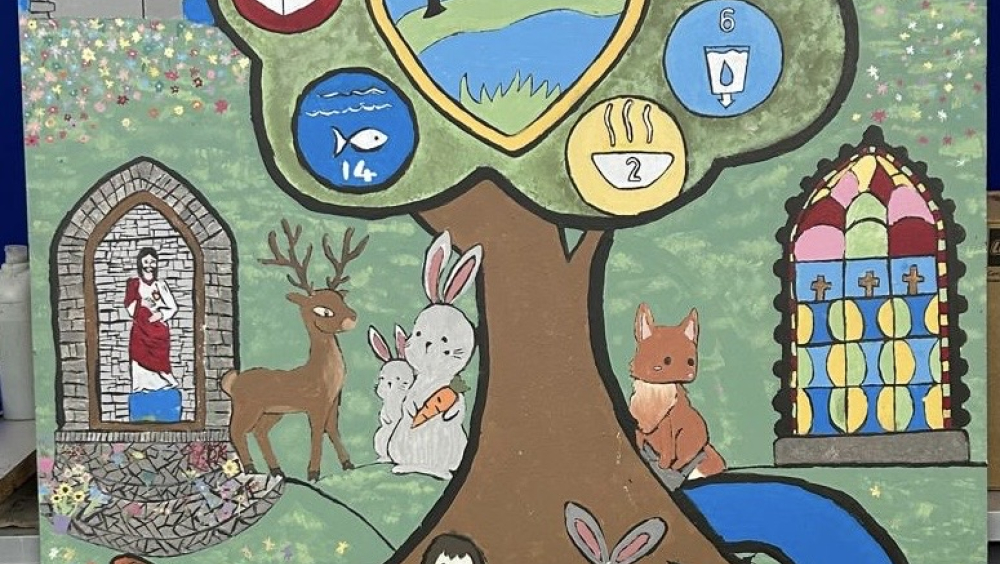
At the centre of our mural is the Lime Tree, also known as The Big Tree, which was once a famous landmark in Dunboyne. Even though the real lime tree had to be cut down because it had become rotten, it is still a strong symbol of our town. When it was removed, pieces of the tree were given to people in the community to remember it by. For us, the tree represents the heart of Dunboyne and the connection between past, present, and future.
We designed each part of the Lime Tree to symbolise something important.
The roots show the things we want to protect: our rivers, trees, wildlife, old buildings, history, biodiversity, and local stories. We included lichen on the roots, because lichen can only grow where the air is clean. This connects to our Air Quality Campaign, where we measured nitrogen dioxide and worked with schools across Europe to learn about pollution through the GLOBE Programme and through the National Tidy Towns Climate Action Award in collaboration with Dunboyne Tidy Towns.
The trunk represents strength and responsibility. It reminds us that we must look after Dunboyne — its nature, buildings, and community — because heritage only survives when people care for it. Our recent achievement of winning the National Schools Award at the Tidy Towns competition shows that we are already living up to this responsibility and playing our part in looking after our village. The old Irish proverb “Ar scáth a chéile a mhaireann na daoine,” which means we live in each other’s shadow, inspired us. It shows that community matters and that we depend on one another to make our home a good place to live.
The branches represent our families and traditions. Our school includes children from many different backgrounds, cultures, and places. Even though we all come from different families, we are united in our school and our community. The branches show that while we grow in different directions, we are still connected.
The leaves symbolise our hopes and dreams for the future. We want peace, a clean environment, healthy ecosystems, and a happy and inclusive community. We also included the Sustainable Development Goals (SDGs) that connect to our learning and actions. As part of this, we take part in GLOBE Ireland projects such as the Temperatures and Trees Campaign and the Rainfall and Flood Resilience project, which help us understand our environment and take meaningful action to protect it.
The six SDGs in our mural are:
SDG 2: Zero Hunger — We want everyone to have access to healthy food. We planted vegetables in our GIY project and made compost using our school wormery.
SDG 4: Quality Education — We believe everyone has the right to learn, explore, and discover. Our mural is part of our education and a way to teach others.
SDG 6: Clean Water and Sanitation — We included the River Tolka because clean water is essential for life, biodiversity, and our community. We took part in the GLOBE Local Authorities Water Programme and we also built a rainwater planter to help reduce flooding.
SDG 13: Climate Action — Our mural encourages people to protect the environment and take action on climate change.
SDG 14: Life Below Water — Rivers connect us to lakes, seas, oceans, and all the wildlife that depends on clean water.
SDG 15: Life on Land — We planted trees, wildflowers, and pollinator-friendly plants to support bees, insects, and local ecosystems.
Around our Lime Tree, we painted some of Dunboyne’s important buildings and landmarks. Each one tells part of the story of our town.
We included St. Peter and St. Paul’s Catholic Church, which was built in 1956 and designed by Simon Aloysius Leonard. Its tall bell tower is one of the best-known features in Dunboyne, and it has beautiful stained-glass windows by artist George Walsh.
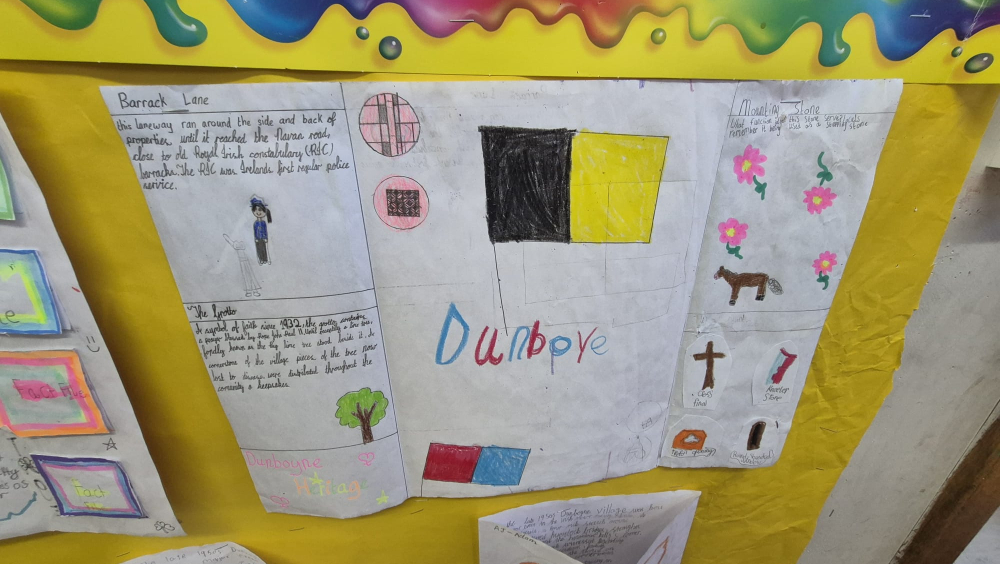
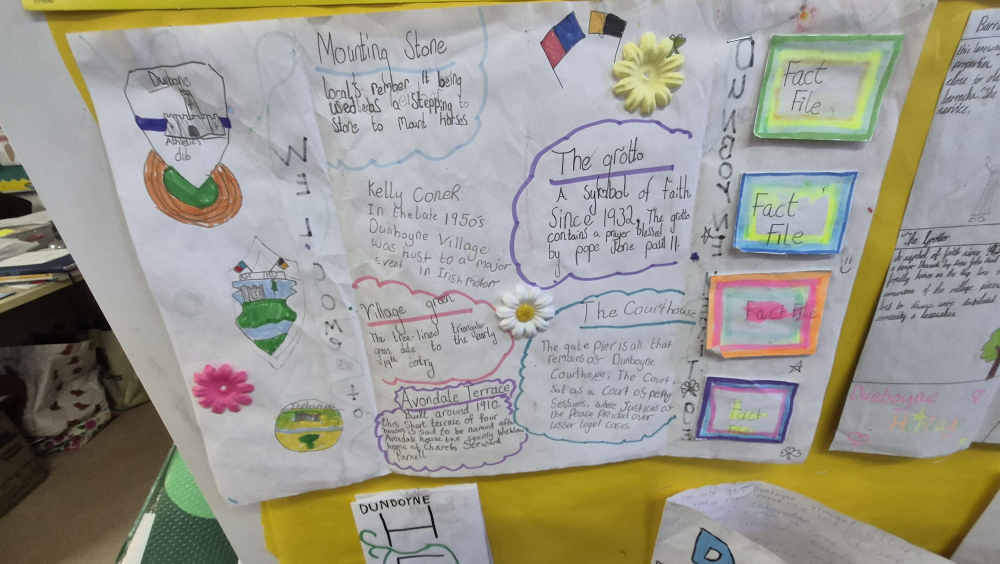
We painted the Grotto, which was blessed by Pope John Paul II and is a symbol of hope, peace, and reflection.
We added the Cast Iron Bridge over the Castle Stream. It was designed by William Turner, whose father Richard Turner created the famous curvilinear glasshouses in the National Botanic Gardens in Dublin.
We also included Hamilton Mausoleum, where Charles Hamilton is buried. He supported agriculture and set up timber mills. His daughters, Letitia and Eva Hamilton, were well-known artists, and Letitia even won a bronze medal in the 1948 Olympic Games for painting!
Finally, we added the River Tolka, which represents clean water, nature, movement, and our connection to the wider world.
Our mural is not just about the past — it is about the future too. We are planting a Hare’s Corner wildlife hedge of 50 native Irish trees, and we are part of the Global Classroom Programme, connecting with students around the world to work on the SDGs.
Our mural shows who we are, what we value, and what we hope for. It is our way of saying that Dunboyne is our home — and we want to protect it.
We made a video showing the progress of our mural: https://drive.google.com/file/d/1qfC5dKe0KC7A0S6aCSdq2yQOEUUY95T6/view?usp=sharing
Thank you to Joan Power, from Heritage in Schools for her guidance and support throughout this project. Thanks also to our teacher mentors Ms Lordan, Ms Ni Bhric and Ms Murphy.