
European Heritage Days Article:
A New Storybook Has Been Published as Part of a European Heritage Days Stories Project in Greece
European Heritage Days Article:
A New Storybook Has Been Published as Part of a European Heritage Days Stories Project in Greece
In 2024, the Herakleidon Museum in Greece was one of the organisations awarded a grant through the European Heritage Days Stories initiative. This project expanded the scope of an exhibition about textiles with interactive workshops and discussions about traditional weaving.
The European Heritage Days Story
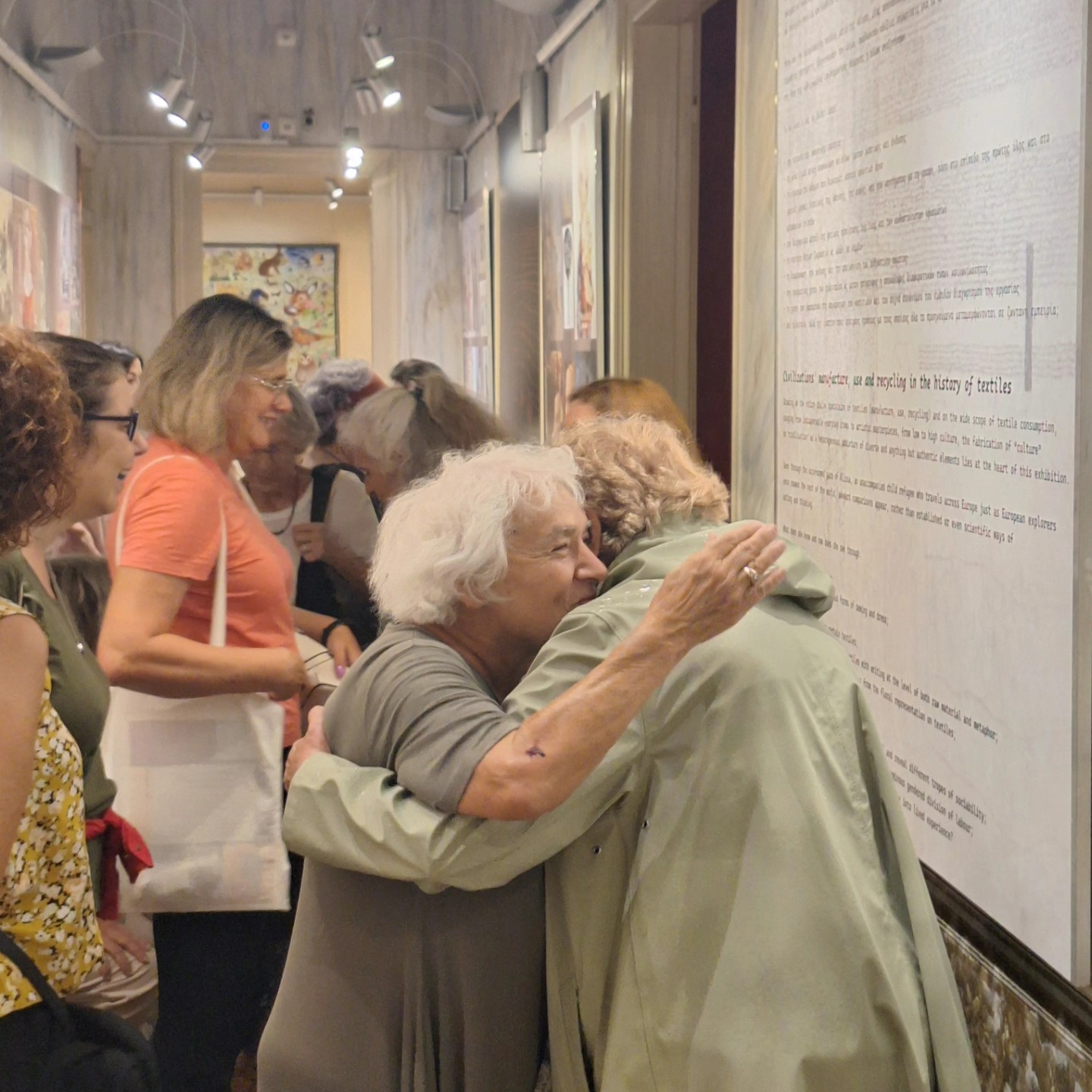
This story described the inspiration for an exhibition called ‘Canvas Encounters – Encounters on Canvas’ which was held in Athens at the Herakleidon Museum between August and October 2024. Featuring installations, paintings, historic and replica fabrics as well as technical demonstrations, the exhibition looked at weaving and clothing across the supply chain from production to recycling. It particularly focussed on the journey through Europe of Alissa, a young asylum seeker whose story was used to highlight themes of migration, clothing and textile heritage.
Three days of interactive experiences and demonstrations
The Stories grant was used to hold three days of activities to accompany the exhibition about the heritage of textiles during the European Heritage Days celebrations in September 2024. The program of events incorporated presentations and discussions about the exhibition, alongside interactive experiences and demonstrations showcasing traditional weaving. Across the weekend over 1,000 visitors took part in activities such as educational workshops for families and the chance to meet and talk to the exhibition’s curator.
An illustrated book about the story which inspired the exhibition was also created, aimed at children aged eight and above. Written by the curator, a professor of prehistoric archaeology at the University of Crete, ‘Alissa at the Crossroads’ follows the journey of a young girl being taught traditional textiles skills such as sewing, embroidery and lacework by her grandmother as they travel across Europe as refugees looking for her parents.
The project’s values and approach
The project’s main goal was to share the intangible cultural heritage of traditional weaving with new audiences of all ages, and by sharing these techniques it aimed to help keep them alive and relevant for future generations. The approach blended craft activities with educational exchange and explored traditional weaving in engaging and authentic ways, with many of the activities being interactive and focused on ideas of connection and participation. The Museum also took a collaborative approach with other organisations; emphasising the values of solidarity and inclusion by working with the UN Refugee Agency, UNHCR, and contextualising regional traditions within a broader context with help from the Tsakonian Archive, an association with the goal of collecting and presenting the history, language, folklore, customs and traditions of Tsakonia in the eastern Peloponnese.
Family activities and events for children
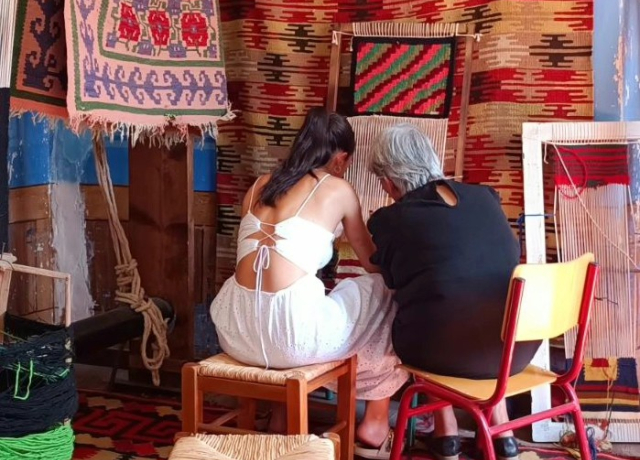
The project aimed to reach a diverse age range, with many of the activities focusing on education for children and intergenerational learning. During the European Heritage Days weekend, families could take part in educational workshops held by the Museum’s Education Department. Across 90 minutes, participants were engaged in experiencing fabrics through their textures as well as discovering the stories and memories they hold. Working with a local middle school, the project also hosted a weaving workshop for a group of students. Titled ‘Learn the Loom, and You’ll Have My Blessing’ it was led by an expert in the history of languages from the Tsakonian Archive and taught the skills needed to create textiles using vertical looms from that area.
Encouraging engagement with intangible heritage
To enhance the benefits of active participation and connecting with intangible cultural heritage as a living legacy, many of the activities sought to highlight the personal aspects of textiles and how this could bring participants closer to their own cultural heritage. The project was also designed to provide visitors with shared experiences and create spaces in which the passion for historic skills were brought to life through creative activities. For example, live demonstrations showcasing centuries-old weaving techniques encouraged visitors to appreciate the processes of this traditional craft, while workshops provided an opportunity for this knowledge to be shared with new audiences and passed down the generations. Another option for visitors to further engage with the project took place during an open meeting with the curator in which the public could ask questions to deepen their understanding and engage in meaningful discussions about the exhibition and its themes.
Ongoing project outcomes
A guestbook at the activities allowed visitors to provide feedback. The Museum is now considering these valuable insights and has published an overview of the project results on its website. Following the exhibition, in February 2025 the ‘Alissa at the Crossroads’ storybook was published in a digital format and is available online in both Greek and English. To raise awareness and distribution, it was submitted to the Network of European Museum Organisations and it is also available for the public to download for free on the Museum’s website.
More information about the project and the ongoing work of the Herakleidon Museum can be found on their website at herakleidon-gr.org and they also regularly post updates on their social media platforms on Facebook and Instagram.