European Heritage Days Article:
How Reimagining Ways of Engaging with Culture can Help Safeguard Heritage at Risk
European Heritage Days Article:
How Reimagining Ways of Engaging with Culture can Help Safeguard Heritage at Risk
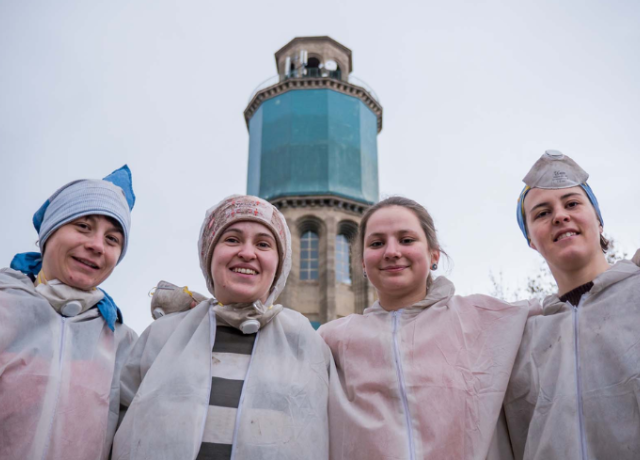
Photo: Volunteers cleaning the Zauhlovačka tower - EHD Story, Czech Republic (credit, Miroslav Prousek and AvantgArt, z. s.)
This article takes a look at case studies and themed event ideas which use examples of digital technologies, contemporary approaches and repurposing of historic buildings to show how Heritage at Risk can be presented in new ways to remain meaningful, accessible, and alive for future generations.
Taking contemporary approaches to connect with new audiences
“The museum attracts mainly the people who are interested in history. We wanted to expand our public, we wanted our message to be heard by more people. So we decided to organize a wedding fashion show of local contemporary designers.” While many cultural heritage topics are historic in nature, this European Heritage Day Story from Bulgaria shows that using themes and activities relevant to the modern age can be a good starting point to get people interested in a way which feels accessible and relevant. Fashion is one example which could be used to attract new audiences; in this case using a contemporary wedding fashion show to bring attention to a new museum exhibition about the history of wedding decoration production in the town of Asenovgrad. Other fashion events might show how endangered textile traditions can be referenced in modern design through patterns, colours and symbols inspired by historic dress, or through natural fabrics which have been used for centuries such as wool or lace. Another idea could be upcycling workshops to tailor unwanted vintage pieces, which could also work for items of furniture or other household objects to bring new creative life into items which might otherwise be discarded.
Other events might look at showcasing historic places and stories through modern approaches and platforms. For example, evening events such as light projections onto ruins or threatened buildings could be used to emphasise the importance of protecting such places through a contemporary approach and at a time which suits busy lifestyles. Aiming to connect with younger audiences aged 18 to 35, one example of this kind of idea is the Una Notte al Museo (Night at the Museum) project in Italy which uses an innovative approach to host gamified experiences and artistic performances at museums to encourage a new generation of museum-goers and help promote knowledge and ongoing interest in local heritage. Young people might also be interested in interactive events such as designing mobile or computer games about local legends which blend traditional narratives with modern styles of storytelling and art, while historic events could also be used as inspiration for workshops to create comic books or graphics with a Heritage at Risk focus.
Using digital technologies for innovative and immersive experiences
While it’s important to note that digitalisation can pose a risk to some forms of heritage, modern technologies can also provide beneficial ways to interact with cultural heritage. One resource for considering how to utilise the potential of digitalisation in the heritage sector is the Working Group Digital Transformation of the Network of European Museum Organisations, which has produced a range of reports including measuring digital audiences and principles of digital cataloguing, and is currently looking at how AI is being integrated across museum functions. One digital benefit highlighted in these reports is how virtual copies of archives can be a resilient way to preserve the content of fragile papers and increase their accessibility to researchers through publication on online platforms. For European Heritage Days events this might be interpreted as workshops to teach skills such as photo digitalisation and restoration or providing training and resources for rural or marginalised groups to encourage them to document and share their heritage online.
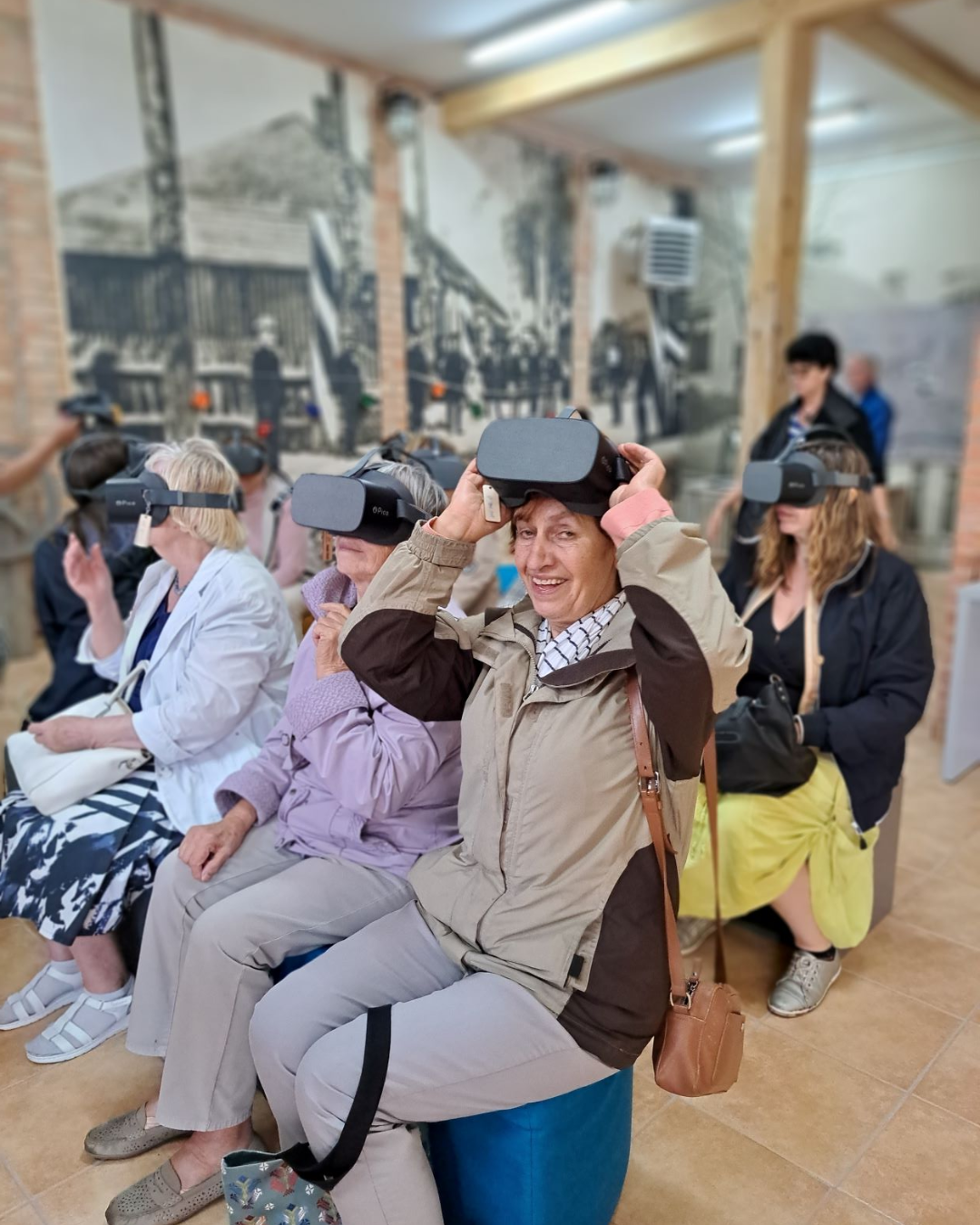
Another form of technology which can reimagine how tangible heritage is engaged with is 3D scanning and printing. This can be used to create replica copies of historic objects which can be touched and handled by visitors in a way which is often not possible with the irreplaceable originals. Virtual and augmented reality technologies can also provide interactive options, such as enhancing detail and information at threatened heritage sites or recreations of lost structures or stories from any historical period. An example of how this might work can be found in the Lithuanian city of Klaipėda where the work and life of the Enlightenment philosopher Immanuel Kant has been interpreted as a VR escape room. Played at the local library, it has been designed to create curiosity and excitement about history, and for Heritage at Risk this concept could be used to create awareness of lesser-known historical figures, stories or places in a fun and engaging way.
Alongside visual elements of cultural heritage, digital technologies can also be used to preserve and share audio, with potential ideas to reimagine heritage including digital remixing of traditional songs or scores to create a fusion of old and new styles. An example of audio recordings being used to capture Heritage at Risk can be found in a European Heritage Days Story from Spain. Traditional Sounds in Danger of Extinction is a project to collect soundscapes of traditional ways of life facing decline in the Sierra del Rincón area near Madrid. Soundtracks of activities such as rope weaving and dry-stone construction can be listened to at specific locations on cultural routes, creating an auditory experience which allows modern visitors to experience the sound heritage of the area.
Showcasing how adapting heritage buildings benefits communities
“It is not possible to simply reconstruct the monument and delay its devastation. The building as such must live”, realised a volunteer featured in a European Heritage Days Story from the Czech Republic. As ways of life change and modernise so too do the needs of communities for buildings, with sustainable repurposing of historic buildings being an option for keeping architectural heritage meaningful for people today and into the future. A Story Woven into Carpet describes the work of a group of volunteers to restore and find a new purpose for a disused but architecturally-significant 20th century carpet factory in Vratislavice nad Nisou. Maintaining the site’s tower to host furniture repair courses, the Story explains the longer-term goal of creating a cultural and artistic centre to bring new life to the building as useful community venue. Events at or about projects like this can draw attention to the importance of local initiatives working to safeguard architectural sites through adapted use, as well as highlighting opportunities for the public to get involved. For example, on-site tours of sites currently undergoing repurposing work or which are campaigning for support can provide interesting event options. Other activity ideas for showcasing how built heritage can be reimagined successfully could include public seminars or walking tours with a route including historic architecture which has been sensitively converted or developments which have respectfully integrated heritage sites to show what is possible by adapting rather than demolishing.
Another European program which could also be helpful in thinking about how to incorporate architectural events is Open House Europe; an initiative which connects architectural and urban heritage festivals in a number of cities including Athens, Prague, Vilnius and Dublin. Many of the issues Open House Europe has focussed on are also relevant to reimagining Heritage at Risk and could provide ideas for venues, activities or collaboration. Take a look at last year’s ‘Future Heritage’ theme for ideas about preservation and innovation, or the ‘Building Futures Together’ topic from 2023 to consider issues around adaptive reuse and sustainability.
More information about the Heritage at Risk theme, as well as a range of event examples and links to other resources can be found in the annual brochure for organisers, available from our publications page.