
THE MAGIC CARPET
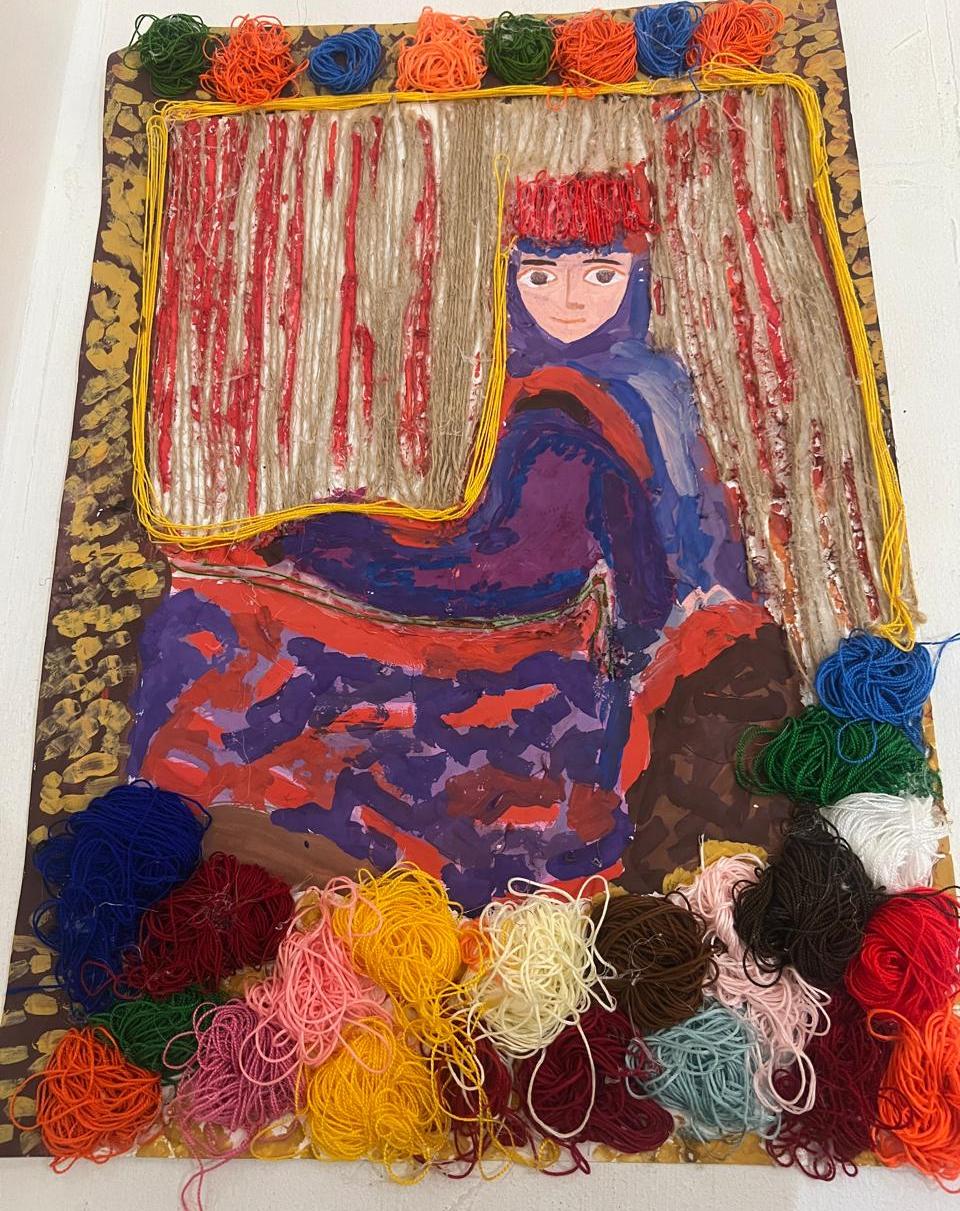
Armenian carpets have long intrigued us. When my grandmother opened her old chest and showed me a small carpet, I felt for the first time that a carpet is not just a colorful piece of cloth. It has its own history, its own message, and its own warmth. From that moment on, I began to study Armenian carpets with my own eyes and discovered many interesting things, which I now want to present in this essay. Carpet weaving is a very old and beloved craft in Armenia. Grandmothers always said that a carpet brings warmth to a home, because it is woven not only with hands, but also with love. People put their dreams and faith into each new carpet. Carpet making began with wool. The wool was first carded to soften it, then hand-spun into long threads. The threads also had to be dyed. In ancient times, people used natural dyes: flowers, herbs, tree bark, and roots. Thanks to them, the carpets were obtained in bright and saturated colors, which almost did not fade over the years. The most interesting aspect of Armenian carpets is the patterns. Each small sign has its own meaning.
For example, stars symbolize joy, cross patterns symbolize protection, and wavy lines symbolize peace. Some rugs feature birds or flowers, which were considered images that brought good fortune and happiness. Our elders used to say that if you place the patterns on the rug correctly, your home would always be filled with good energy. Carpets in different regions of Armenia were slightly different from each other. For example, in the villages of Gegharkunik, wavy patterns resembling water were often woven, as water was important there, and people believed that it brought peace to the home. In more remote regions, images like the sun and stars were preferred to bring light and prosperity to the home. Carpet weaving also created solidarity within the family.
Mothers, grandmothers, and girls would sit together in front of the loom and work for hours. It was not only work, but also a pleasant time, during which they would tell stories, sing songs, and teach the meanings of colors and patterns. Girls learned to weave rugs at a very early age because they believed that every girl should have a beautiful handmade rug. Rugs also had a special meaning during family holidays. A small rug was placed under a newborn's bed to ensure a peaceful sleep. Those moving into a new house were given a carpet to fill the house with goodness. And during weddings, the carpet placed on the threshold symbolized the soft and peaceful beginning of a new life. Even today, old Armenian carpets are preserved in collections and museums. By looking at them, we can learn what our ancestors liked, what colors they chose, and what message they left with their patterns. A rug is not just a rug. It is a story, a soft, colorful book that reminds us of a family, a people, and our past. Every rug contains a small story, a small dream, and great love. Rugs also had a special meaning during family holidays. A small rug was placed under a newborn's bed to ensure a peaceful sleep. Those moving into a new home were given a carpet to fill the house with goodness. And during weddings, the carpet placed on the threshold symbolized the soft and peaceful beginning of a new life. Even today, ancient Armenian carpets are preserved in collections and museums. By looking at them, we can learn what our ancestors loved, what colors they chose, and what messages they left with their patterns. A rug is not just a rug. It is a story, a soft, colorful book that reminds us of a family, a people, and our past. Inside every rug is a little story, a little dream, and a big love. In conclusion, I would like to say that Armenian carpet weaving is one of the most beautiful and warm traditions of our people. Each carpet seems to be a story - about a family, a village, or an entire generation. I learned a lot about carpets and now I understand better why our grandmothers loved this craft so much. Carpets remind us that our past is beautiful, and we should preserve and appreciate it.